


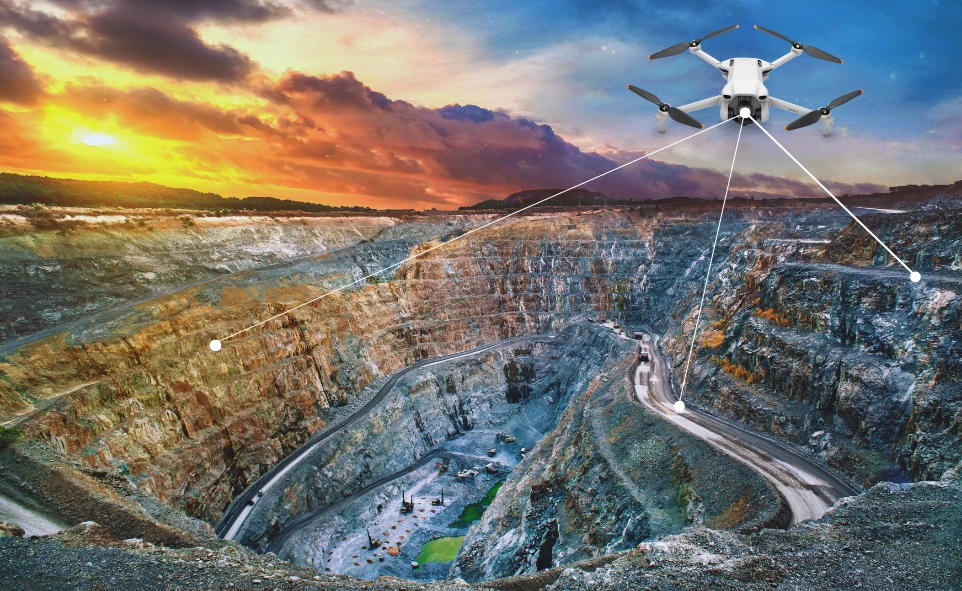
Open-cast (surface) mining digs away soil and rock to reach ore that lies close to the earth’s surface. The pits are wide, benches are high, and the ground keeps changing as trucks and mechanical diggers move material every hour.
Inspecting these areas manually is slow and risky. Drones can fly fast, see more, and help in keeping people out of harm’s way. In this blog, we look at the many jobs they do like, mapping the site, tracking ground movement, guiding blasts, inspecting assets, and helping mines meet environmental rules.
Enhanced Site Surveying and Mapping
Every haul road, sump, and dump starts with a map. If the map is old, plans fail and money is lost. Drone flights gather fresh images in minutes, so engineers can react to today’s terrain, not last month’s. This speeds up topographic & contour mapping, trimming survey waits from weeks to hours, and letting teams redesign ramps or drains on the fly.
From photos to smart 3D models
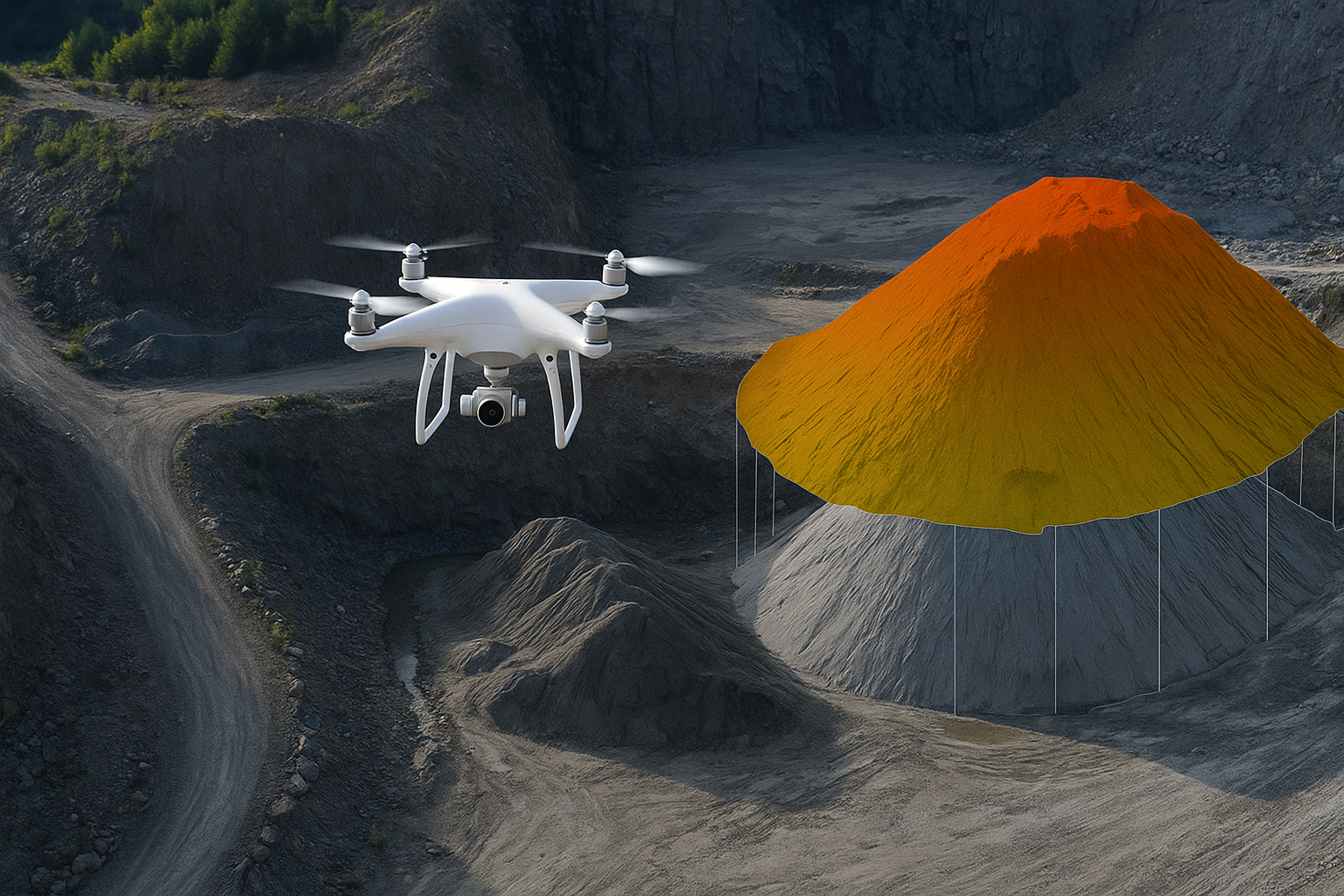
Photogrammetry or LiDAR turns overlapping photos into Digital Elevation Models (DEM), Digital Terrain Models (DTM), and Digital Surface Models (DSM). Each model answers a different need: bare earth, current surface, or obstacles. A UAV-based land survey and mapping workflow delivers near‑centimeter detail while slashing field labor, which means better mine plans, tighter budgets, and fewer surprise clashes on site.
Safety and Geotechnical Monitoring
Highwalls may crack, slopes can slip, and blast zones must stay clear of workers and machines. Continuous drone-based surveillance lets geotechs scan faces, berms, and haul roads from a safe distance, spotting tension cracks, sinkholes, or loose boulders before someone drives past them.
Software compares flight to flight and highlights even tiny shifts. UAV mapping for precise monitoring shows if a bench is bulging, a dump is settling, or a drainage path is eroding. Early warnings mean crews can unload stress, reroute traffic, or shore up weak spots long before a major slide or collapse happens.
Optimized Blast Planning and Analysis
Blasting works only when drill holes match the real surface. A quick UAV-based land survey before drilling captures true burdens and elevations. Planners place holes with confidence, limit flyrock, and keep vibrations within legal limits.
Right after the blast, drones inspect the area again. High-resolution images feed software that measures fragment sizes, heave, and throw. If rock is too coarse or fines are high, the team tweaks stemming, spacing, or charge weights next time. This feedback loop makes each blast safer, cleaner, and cheaper.
Infrastructure and Asset Inspections
Critical assets, zero downtime
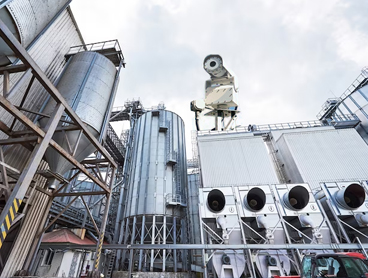
Conveyors, crushers, stackers, berms, even long pipelines are hard and expensive to inspect by hand. Partnering with a trusted land survey and mapping service brings planned drone missions, crisp visuals, and tagged defects without scaffolds, manlifts, or long shutdowns.
Storing each flight’s photos builds a living record. Maintenance teams scroll back to see when rust started, a belt drifted, or a leak appeared. Repairs become proactive, not reactive, cutting downtime and extending asset life.
Regulatory Compliance and Environmental Monitoring
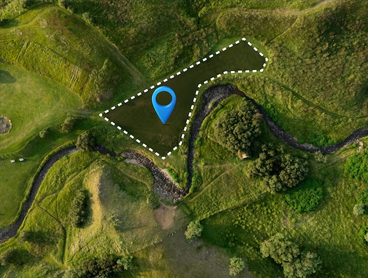
Modern mines must prove they protect land and water. Regulators ask for evidence of rehab progress, erosion control, dust suppression, and vegetation regrowth. Drones capture consistent, georeferenced data that makes honest, transparent reports easy to compile. Clear visuals help communities and investors trust that promises are real and on schedule.
Drones now touch almost every step in open-cast mining. They boost efficiency, sharpen planning, reduce exposure to danger, support compliance, and even lift sustainability efforts, far beyond simple stockpile counts.